
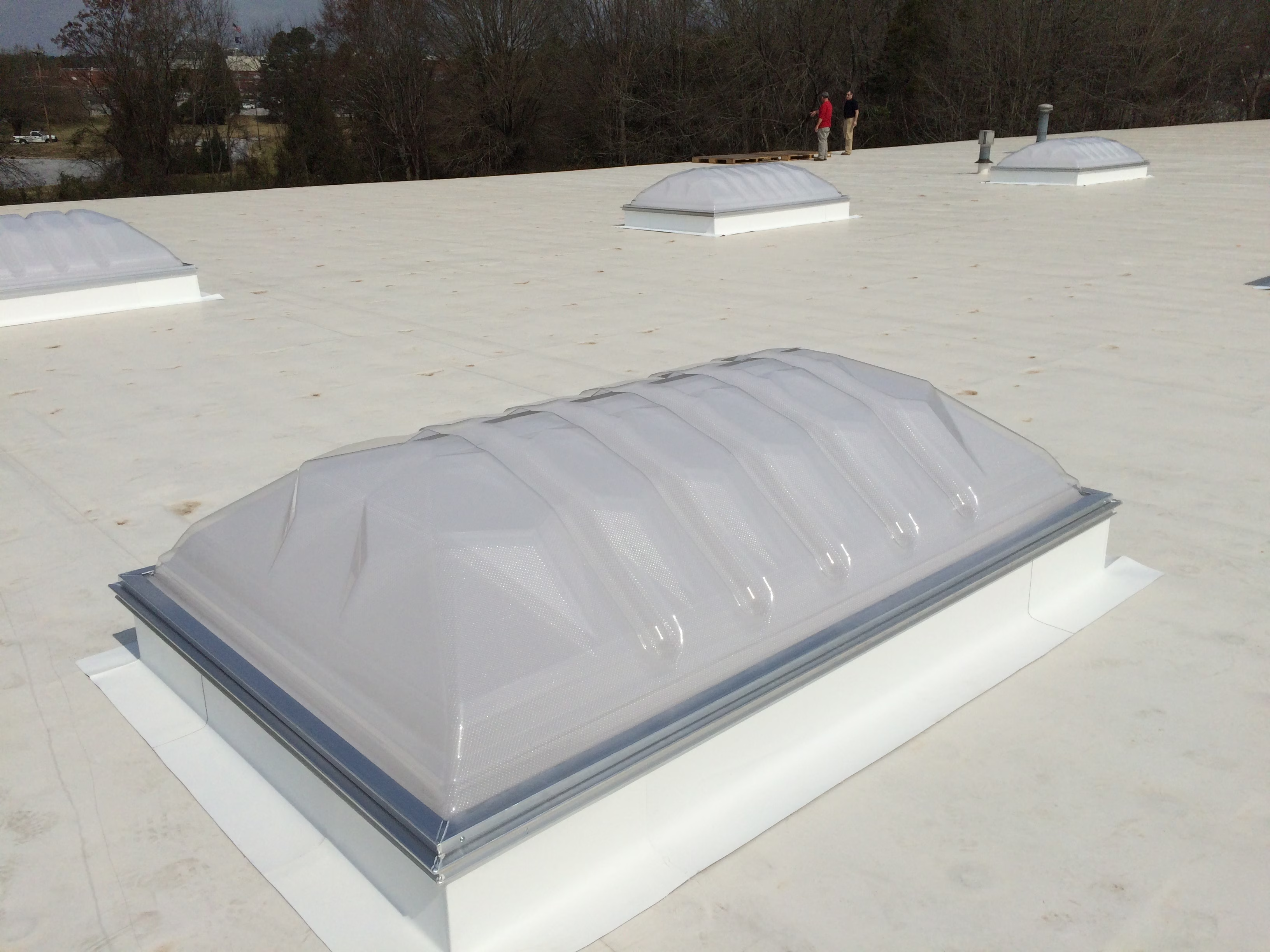
One roof, a dozen different tenants over time
Flex space is defined by how often it changes. A bay that held a distributor last year holds a contractor's shop this year and a small assembly operation next year, and every one of those tenants leaves a mark on the roof. New rooftop units, fresh conduit and HVAC runs, abandoned curbs from equipment that left with the last lease - the membrane accumulates years of undocumented modification. We roof industrial flex buildings in Charleston around that churn, because the roof's biggest enemy here is not weather, it is the parade of tenant improvements no one wrote down.
Charleston's flex and light-industrial inventory is spread across the corridors that move freight: the industrial pockets around South Charleston and the West Virginia Regional Technology Park, the older tilt-wall and metal buildings along Patrick Street and the West Side, and the multi-tenant parks feeding off the I-64, I-77, and I-79 interchange. With chemical, distribution, service, and tech tenants all sharing the same building stock, a single flex roof can sit over four completely different operations at once - each with its own equipment and its own tolerance for disruption.
Why every flex job starts with a penetration inventory
The first thing we do on a flex building is count and map the penetrations, because the records almost never match what is actually on the roof. Tenant build-outs add HVAC units and cut the membrane for new electrical and mechanical without that ever reaching the property file. Before any reroof, we photograph and locate every curb, vent, and conduit run, compare it to the original drawings where they exist, and flag the non-standard or poorly sealed penetrations that need remediation before new membrane goes down. That survey is what keeps a warranty dispute from showing up two years later over a tenant cut nobody knew about.
The lease-transition leak nobody catches
The most preventable failure on a flex roof happens at turnover. A tenant vacates, their rooftop units come off, and the open curbs get a sheet of temporary cover that fails inside a rain event or two - and because the bay below is empty, no one is there to report the drip until water has been tracking into the deck for weeks. We treat lease-transition inspections as their own service: confirm every curb is properly capped, verify former-tenant penetrations are permanently sealed, and clear the drains, because vacant bays collect debris faster than occupied ones and the roof gets no attention from inside.
Building a membrane for mixed loads
Flex occupancy means the roof has to absorb whatever the current tenants put on it. One bay runs a single light-duty rooftop unit; the next runs heavy ventilation for a fabrication shop; service contractors send crews up regularly for their own HVAC. The system has to take that variety without becoming a liability the next time the mix shifts.
System selection by building type
Charleston's flex stock runs from 1970s tilt-wall with aging built-up roofing to modern pre-engineered metal buildings with standing-seam panels, and the right system depends on the deck. For tilt-wall and concrete flex buildings, 60-mil TPO mechanically attached over new polyiso is the cost-effective baseline. Where rooftop equipment density and multi-tenant service traffic are high, we step up to 80-mil TPO or 60-mil PVC fully adhered for the added puncture and traffic resistance, since flex roofs see more random foot traffic than almost any other building type. On pre-engineered metal buildings we weigh a standing-seam recover or a silicone-coated metal restoration against full tear-off, judged on panel condition, purlin spacing, and load capacity.
Drainage that survives changing occupancy
Flex roofs drain differently after a few lease cycles than they did the day they were built. New rooftop units get set down without regard to the original slope, added curbs dam water against their high side, and tenant build-outs reroute or block internal drains that nobody re-checked. We treat drainage as its own line item on a flex reroof: confirm every primary drain and overflow scupper is clear and correctly placed, add tapered insulation to break up the dead-flat ponding areas that equipment changes have created, and make sure no new curb is sitting in a path that backs water up behind it. On a multi-tenant building that ponding is not just a membrane problem, it is a liability that moves from bay to bay as the roster turns over, so we design the water off the roof for the building as a whole rather than for whoever happens to occupy it this year.
Coordinating work across a live tenant roster
You cannot shut a flex building down, because there is no single occupant to shut down. We start with a bay-by-bay occupancy map and a lease-contact list from property management, identify which bays have active rooftop equipment and which sit vacant, and note which tenants are sensitive to noise or short HVAC downtime. Work sequencing and daily dry-in run through the property manager, and tenants get advance notice through that single channel rather than fielding the crew directly. Every section is closed and watertight at the end of the day, so no tenant comes in to a wet bay.
What a Charleston flex roof review covers
For an investor or property manager, our assessment is built to support both immediate scope and longer-term capital planning:
- A full photographed penetration inventory mapped against original drawings
- Curb-cap and seal status at every former-tenant and vacant-bay penetration
- Deck type and condition across the building, including any standing-seam metal sections
- Membrane and attachment selection matched to rooftop equipment density and service traffic
- Drainage and debris status, with attention to under-served vacant bays
- A bay-by-bay occupancy and coordination plan run through property management
Portfolio owners managing several flex properties get standardized condition reports they can roll into capital planning across the whole holding, and we price each project per roof square after a walk and core sample where one is warranted. The result is a roof built to survive the next tenant, not just the current one: surveyed honestly, specified for mixed loads, and installed without disrupting the businesses already inside. For a multi-tenant flex building anywhere across the Charleston corridors, we can deliver the inventory, the condition report, and a fixed scope behind it.
Q&A
Questions about Industrial Flex Space Roofing
What decides the next roof step?
Moisture risk, membrane condition, drainage, access, roof traffic, rooftop equipment, age, warranty language, and building operations all shape the recommendation.
Can the building stay open during the work?
Often yes. The scope needs daily dry-in planning, staging notes, tenant protection, safety controls, and access limits written before field work starts.
What should ownership send before a roof walk?
Useful items include leak photos, prior proposals, roof plans, warranty paperwork, roof age, interior leak locations, and the best contact for roof access.
Related Roof Decisions

Manufacturing Plant Roofing in West Virginia
A roof above Patrick Street Corridor does not get a generic Manufacturing Plant Roofing scope from us. We look at how people enter the building, how materials can.
→
Hotel and Hospitality Roofing in West Virginia
Hotel and Hospitality Roofing on a Charleston commercial building has to respect both the roof and the day below it. Around Capitol Market District, crews may be.
→
Data Center Roofing in West Virginia
When an owner asks about Warehouse Roofing, we do not start with a brochure. We start with the weather, the roof assembly, the access route, the interior exposure.
→
Pharmaceutical & Laboratory Roofing in West Virginia
On a pharmaceutical or laboratory building, a leak is not a maintenance ticket. A few drops landing on a compounding bench, a sequencer, an incubator, or a.
→